
Intro
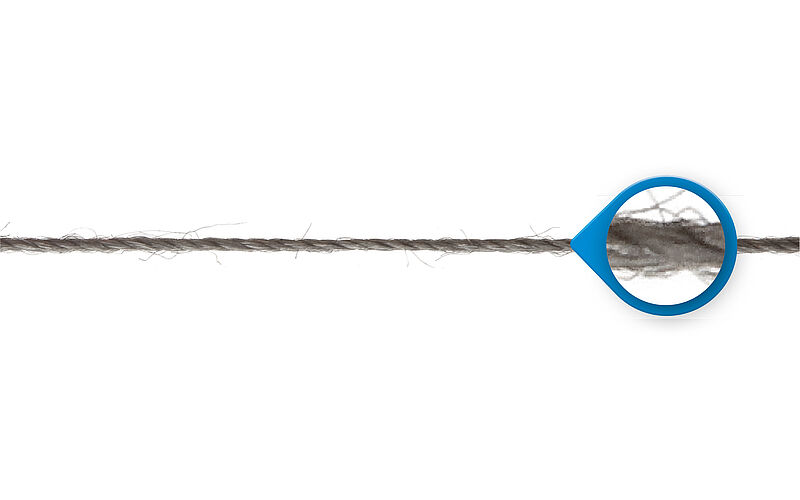
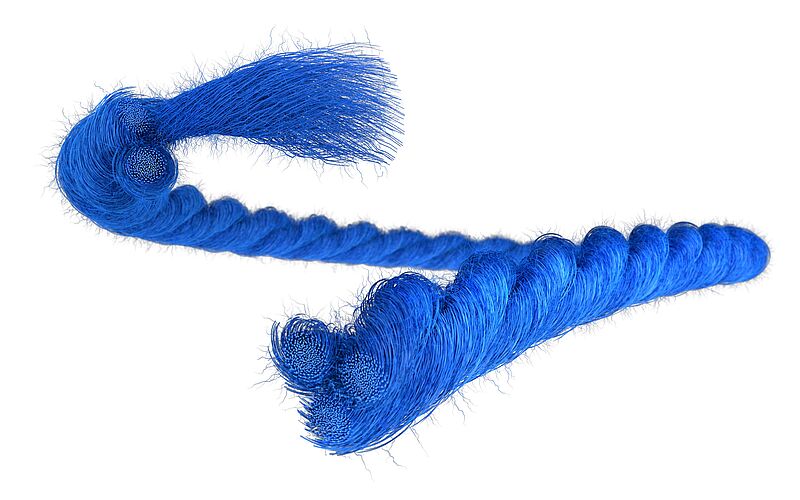
In this type of sewing thread, the single yarns consist of individual, short fibres that are twisted together. The raw materials most commonly used for this type of construction are cotton, polyester and aramid.
While natural fibres are available as staple fibres (limited length), synthetic raw materials can be used to produce cut staple fibres and staple fibres (schappe). In the case of staple fibres, the filaments are stretched lengthwise and break at their weak points. This results in fibres of varying lengths (20 to 70 mm) with tapered fibre ends. Spun threads have a relatively smooth thread surface. In the case of cut staple fibres, the filaments are cut into pieces of equal length (e.g. approx. 40 mm, based on the model of high-quality cotton).
Cutting the fibres results in smooth fibre ends of uniform thickness. Spun threads acquire a textile thread surface. Cotton spun threads are mainly used in the clothing industry for special applications. AMANN cotton sewing threads include Mercifil and MercifilGD. Spun threads made from para- or meta-aramid are used for technical applications.
FAQ
-
A spun thread consists of short fibres (staple fibres) that are twisted together to form single yarns, which are then twisted into the final sewing thread.
-
Common raw materials include cotton, polyester and aramid fibres.
-
Staple fibres are created by stretching filaments until they break at weak points, resulting in fibres of varying lengths with tapered ends.
Cut staple fibres are cut into uniform lengths (e.g. approx. 40 mm), resulting in even fibre ends and a more controlled structure.
-
Staple fibres typically range between approximately 20 and 70 mm, depending on the production process.
-
Fibre length affects strength, surface character and uniformity. Longer and more uniform fibres generally contribute to better thread quality.
-
Spun threads have a textile-like surface. Depending on fibre preparation, the surface may appear relatively smooth but retains a natural fibre character.
-
Standard spun threads are often used in apparel. However, spun threads made from para-aramid or meta-aramid are used in technical applications requiring special performance properties.
-
Cotton spun threads are mainly used in the clothing industry, particularly for special applications where a natural fibre appearance or traditional processing behaviour is desired.
-
Spun threads are made from short fibres twisted together, while continuous filament threads consist of endless filaments, resulting in different strength levels and surface characteristics.
-
Spun threads offer a textile appearance and specific handling characteristics that are desirable in apparel and certain decorative or technical applications.