
Intro
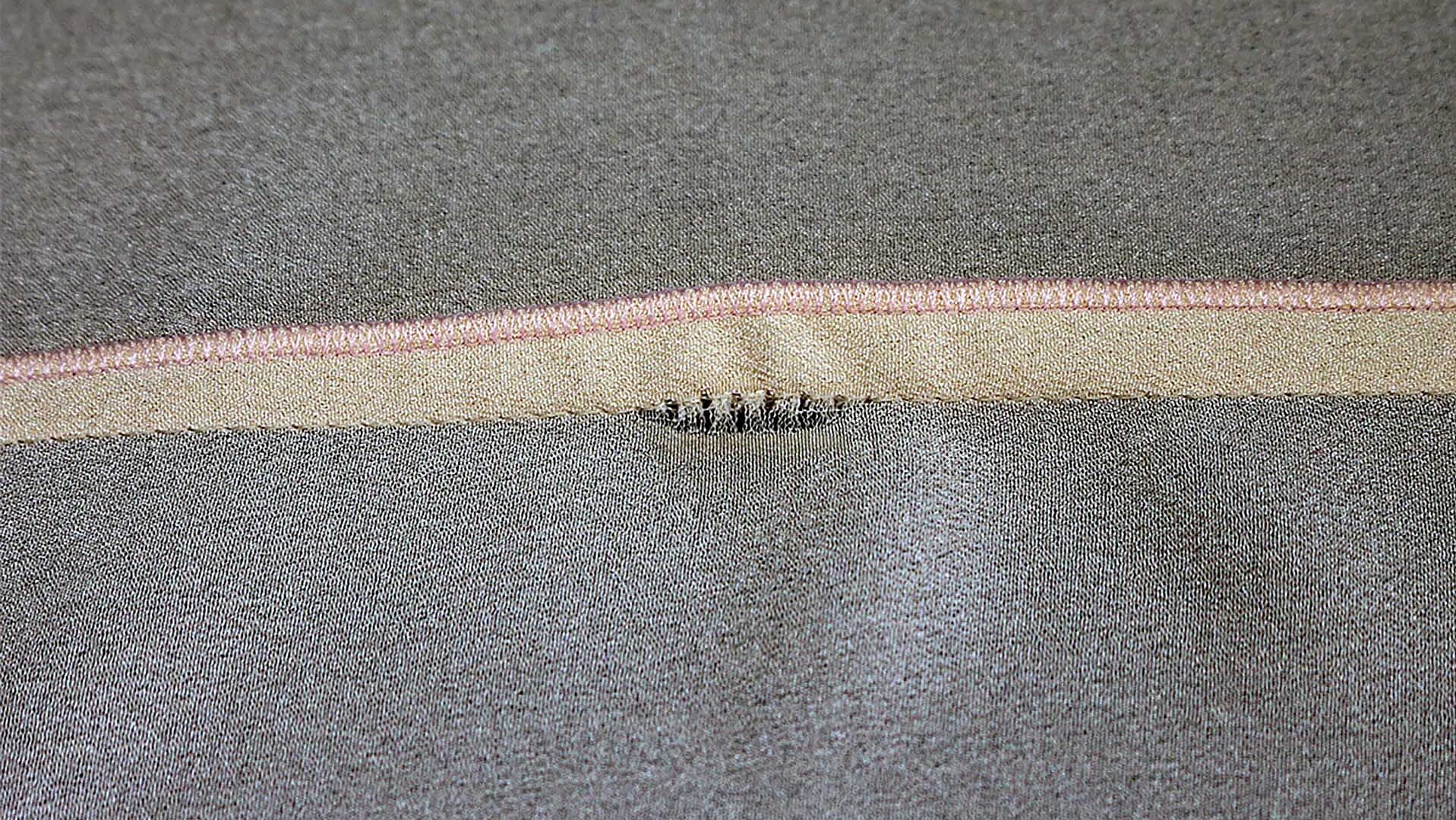
Sometimes a seam looks perfect: clean stitching, intact sewing thread, no visible defects.
And yet, under tensile load, the fabric suddenly opens along the seam line. A hole appears – even though the seam itself remains undamaged.
This is what we call seam slippage.
And it is one of the most misunderstood issues in garment production.
What is seam slippage?
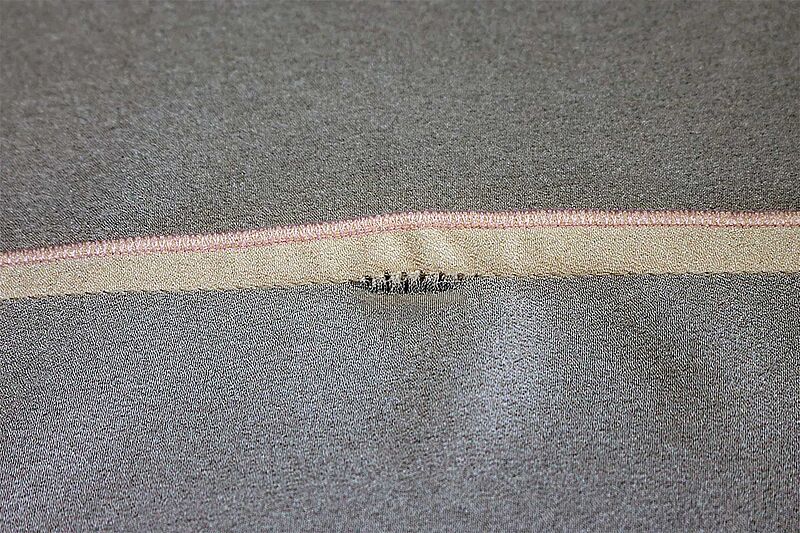
Seam slippage occurs when an undesired opening develops in the seam area under load, caused by the displacement of warp and weft yarns in the fabric. The sewing thread does not break, and the seam construction remains intact – but the fabric yarns move apart.
The result is a clear loss of quality, both visually and functionally.
The real cause: the fabric, not the seam
Contrary to common assumptions, seam slippage is usually not caused by the seam or the sewing thread.
In most cases, the root cause lies in the fabric itself.
Typical reasons include:
- Low adhesion between warp and weft yarns
- Loose fabric constructions
- Certain weaves such as
- plain weave
- twill weave
- satin weave
- Specific fabric finishes that influence yarn mobility
These parameters are defined during fabric manufacturing and can only be optimised by the fabric producer.
What can be done during garment production?
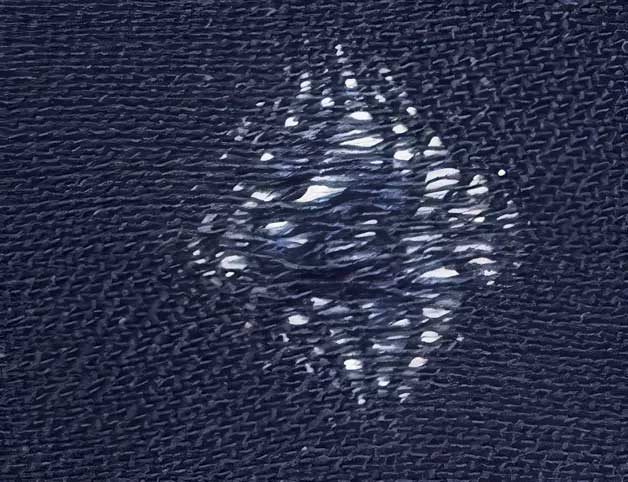
Although seam slippage cannot be fully eliminated by sewing technology alone, its impact can be reduced through targeted processing measures.
Based on AMANN’s internally developed testing procedures – using seam strength recommendations from Euratex TCG and DTB Produktinfo as a reference – various parameters were evaluated.
The conclusion was clear: The required strength level cannot always be achieved, but seam slippage can be minimised.
Practical measures to reduce seam slippage
1. Use a suitable stitch type
- Stitch type 301 (lockstitch)
- Stitch type 401 (double chain stitch)
These stitch types help distribute tensile forces more evenly in the seam area.


2. Choose an appropriate seam construction
- Double felled seam
- Safety seam (e.g. stitch type 401 + 504)
Stable, multi-layer seam constructions provide additional resistance against fabric yarn displacement.
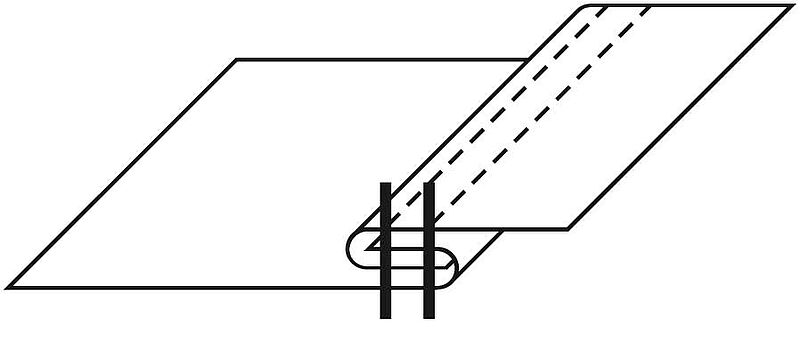

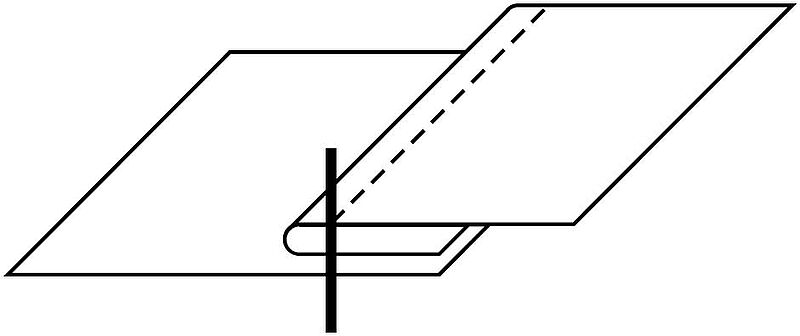
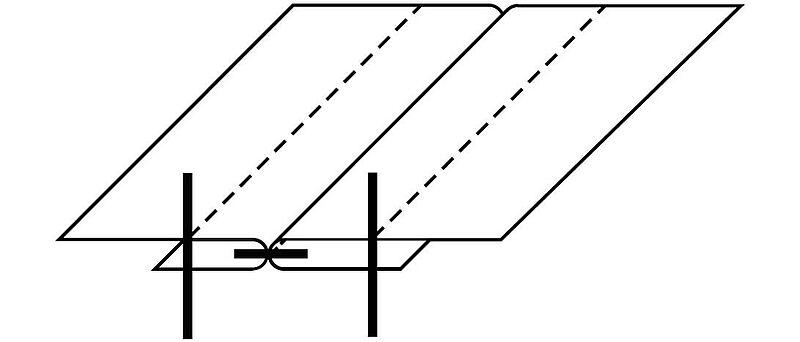
3. Secure closing seams with additional topstitching
For example by:
- Folding the seam allowance to one side and topstitching
- Opening the seam allowances and topstitching on both sides
This improves seam stability and often enhances the visual appearance.
4. Bond the seam line before sewing
In critical applications, reinforcing the seam line with an inlay can be effective.
Important parameters:
- Seam allowance of at least 1 cm
- Stitch density of at least 4 stitches/cm (10 stitches/inch)
- If required, additional serging of the individual layers to protect seam edges

Keep in mind: every solution has an impact
All additional processing steps may:
- affect seam handle and comfort
- change seam appearance
- increase production costs
Therefore, each measure should be carefully evaluated.
FAQ
-
Seam slippage occurs when the fabric yarns move apart along the seam line under tensile load while the sewing thread and seam construction remain intact. This creates an opening in the fabric even though the seam itself has not failed. The result is a visible quality defect that affects both appearance and functionality.
-
Seam slippage is usually caused by the fabric rather than the seam or sewing thread. Factors such as low adhesion between warp and weft yarns, loose fabric constructions, or certain weave types increase the risk. Fabric finishes can also influence yarn mobility and reduce slip resistance.
-
In most cases, seam slippage is not caused by the sewing thread or stitch quality. The problem usually originates from the fabric structure and the movement of yarns under stress. The seam remains intact while the fabric itself opens along the seam line.
-
Stitch type 301 (lockstitch) and stitch type 401 (double chain stitch) are commonly used to help reduce seam slippage. These stitch types distribute tensile forces more evenly in the seam area. Better force distribution helps limit yarn displacement in the fabric.
-
Stable seam constructions such as double felled seams or safety seams provide additional resistance against yarn displacement. Multi-layer seam constructions distribute mechanical loads more effectively. This helps reduce the risk of seam openings under stress .
-
Yes, additional topstitching can improve seam stability. This can be achieved by folding seam allowances to one side and topstitching or by opening them and stitching both sides. These techniques stabilize the seam and can also improve the visual appearance.
-
Reinforcing the seam line with an inlay before sewing can help stabilize critical areas. Recommended parameters include a seam allowance of at least 1 cm and a stitch density of at least 4 stitches per cm. Additional serging may also be used to protect seam edges.
-
Seam slippage cannot always be fully eliminated through sewing technology alone. However, its impact can be reduced by selecting suitable stitch types, seam constructions, and reinforcement techniques. Proper evaluation and testing are essential to determine the best processing solution.