
Intro
A seam can be strong.
A seam can be elastic.
But can it also be soft?
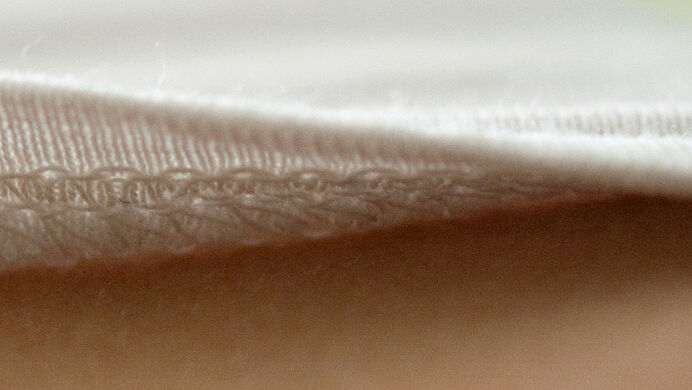
In many applications - especially garments worn close to the body - seam softness is just as important as seam strength. A seam that feels hard, bulky or abrasive can significantly reduce wearing comfort, even if the mechanical performance is sufficient.
Achieving a soft seam is not accidental. It is the result of selecting the right stitch type, adjusting the correct thread balance and controlling stitch density.
Following parameters define the softness of a seam.
The sewing thread
It is sometimes mistakenly assumed that the softness of a seam is influenced solely by the choice of a soft sewing thread. In most cases, the focus here is on the looper thread in overlock chain stitches, because this usually lies directly on the skin and is associated with a potentially scratchy seam.
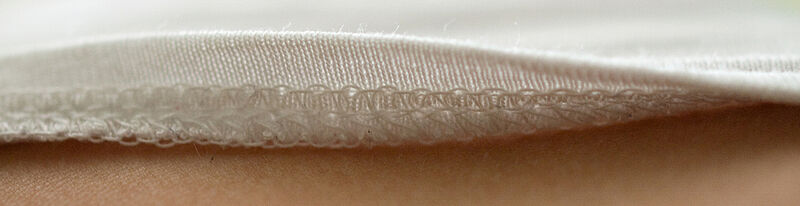
However, it is correct that the choice of the right needle thread is particularly decisive for the softness of a seam. As already mentioned, the needle threads on the underside of the seam form small loops when they are intertwined with the looper thread. The softer and smaller these loops are, the softer the seam. If the looper thread on the underside of the seam is then separated, only the interloops of the needle thread remain. With multifilaments or core spun thread commonly used, these loops can feel rough and cause scratchy seams.
AMANN's Sabasoft, the special sewing thread for soft coverstitch seams made from texturised polyester microfilaments, sets new standards in this area. In contrast to multifilaments, the optical diameter of microfilaments is significantly finer. This makes the sewing thread extremely soft and supple. The loops that form on the underside of the seam during the sewing process and lead to scratchy seams if the wrong sewing thread is used are exceptionally soft when Sabasoft is used, giving the entire seam a soft feel. Sabasoft is an extremely high-performance sewing thread that can be sewn at speeds of up to 5,000 stitches per minute, depending on the type of machine. It is also resistant to yellowing and abrasion and can be used as both needle and looper thread.
stitch type that makes a seam highly elastic can result in a scratchy feel, while a sewing thread that is wonderfully soft may not offer enough elasticity. This also depends on the material being sewn and the selected sewing parameters.
There are no standard sewing thread recommendations for seam serging. The choice of sewing thread always depends on the outer fabric used, the desired look, the processing parameters and other factors. Polyester/polyester core spun threads (Saba), fine polyester multifilaments (Serafil) and textured polyester multifilaments (Sabatex) can be used, either individually or in combination. The feel of the seam depends on the material and the sewing parameters. It is therefore recommended that individual tests be carried out in order to select the best possible sewing thread for each case.
Stitch type and thread balance
Stitch type 301 is the most inconspicuous in terms of seam softness. Since the interlooping of the needle and bobbin thread takes place in the centre of the fabric, this stitch type is barely noticeable on the skin. With stitch type 514, which is mainly used for closing seams, there is a risk of scratching on the underside of the seam due to the needle thread loops. It is therefore advisable not to fold the underside of the seam onto the wearer's skin so that the needle thread loops do not come into contact with the skin.

With the overlock stitch types (406, 407 and 602, 605, 607), the interlooping of the fabric on the underside of the seam and the large overlock width influence the softness. The looper thread is visible and, in unfavourable cases, can also be felt. However, as already mentioned, the needle thread or the needle thread loops on the underside of the seam have at least as much influence on the softness of the seam. Deliberately loosening the needle thread tension for overlock seams can result in a softer seam, as the needle thread loops tip over. It should be noted here that this can cause the seam to gape and alter the seam strength and elasticity.


Summary of the key recommendations for action
- The sewing thread should be selected according to the planned application in terms of raw material, construction type and thread size.
- The stitch type should be selected based on the desired softness and required elasticity.
- The thread balance should be as close to ideal as possible to ensure good seam strength. If the seam softness achieved is insufficient, the needle thread tension can be loosened slightly for flatlock seams so that the needle thread loops bend.
FAQ
-
Soft seams are achieved by combining the right stitch type, correct thread balance, controlled stitch density, and proper machine adjustment.
In industrial garment production, seam softness depends on how the stitch structure distributes thread within the material. Balanced thread tension prevents interlocking displacement or loop distortion, reducing seam stiffness while maintaining strength and durability.
-
The best stitch type for soft seams depends on the application and fabric.
Stitch type 301 (double lockstitch) provides controlled interlocking when properly balanced. Stitch type 401 (double chainstitch) and multi-thread stitches such as 514, 605, and 607 offer different loop formations that can improve flexibility and seam hand feel. Correct thread balance is essential for all stitch types to ensure optimal softness.
-
Thread balance is one of the most critical factors in achieving soft seams.
In stitch type 301, incorrect tension shifts the interlocking point away from the fabric center, increasing seam rigidity. In stitch type 607, unfavorable settings can cause loops to tip over on the underside, leading to thread accumulation and reduced comfort. Proper tension adjustment ensures even thread distribution and improved seam feel.
-
Yes, stitch density directly influences seam softness and seam elasticity.
Higher stitch density increases needle penetrations and thread concentration within a defined seam length, which can reduce softness. Lower stitch density reduces material perforation and thread accumulation while maintaining performance requirements. Its influence on seam elasticity can be measured using a tension testing machine.
-
A seam may meet mechanical strength requirements but still feel hard or abrasive if stitch construction or thread balance is unfavorable.
Excessive thread accumulation, loop distortion, or shifted interlocking points can increase seam rigidity. In garments worn close to the body, such as sports shirts at the neckline or hem, seam softness significantly impacts perceived quality and wearing comfort.
-
Seam elasticity can be objectively measured using a tension testing machine.
However, seam softness also requires tactile evaluation. While elasticity and softness are not identical, stitch density, thread balance, and stitch structure influence both parameters. A combination of technical testing and practical assessment ensures optimal seam comfort.