Polytetrafluoroethylene (PTFE)
The polymer is formed by polymerisation. The polytetrafluoroethylene fibres are manufactured using a process known as matrix spinning, a type of wet spinning process.

AMANN Knowledge Hub
Our Wiki provides clear, structured and reliable technical information on sewing and embroidery threads, materials, applications and performance characteristics. Explore detailed definitions, process explanations and foundational knowledge.
The polymer is formed by polymerisation. The polytetrafluoroethylene fibres are manufactured using a process known as matrix spinning, a type of wet spinning process.
Polymerisation is used to form the polymer. The polypropylene fibres are spun using a melt spinning process.
Polymerisation is used to form the polymer. The polyethylene fibres are produced using a melt spinning process.
Para-aramids are manufactured by polycondensation and spun using the wet spinning process.
Manufacture by thermal treatment (carbonisation) of suitable carbon-containing materials, such as polyacrylonitrile or viscose.
The polymer is formed by polycondensation. The fibres are obtained by melt spinning.
Polymerisation takes place through polycondensation. The fibre is obtained through melt spinning.
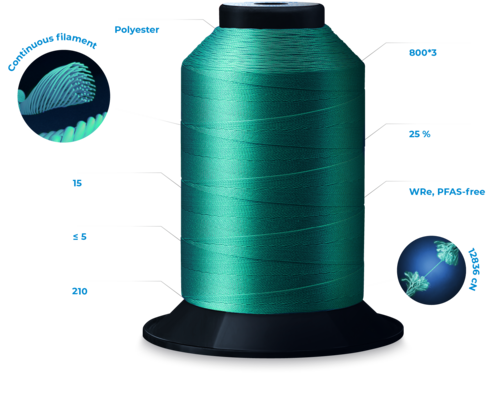
In continuous filament threads, the single yarns are made from continuous fibres (filaments). In some cases, up to 200 individual filaments are combined to form a yarn…
In case of core spun threads, the single yarns consist of a core of multifilaments and a sheath of fine fibres. In sewing thread production, this finished strand is…