
Intro
To assess seam stability, it is important to test the seam's resistance to slippage and its seam breaking strength.
Seam slippage behaviour refers to the tendency of the warp and weft threads of a fabric to shift relative to each other in the seam area when tensile forces are applied transversely to the seam direction. Low seam slippage resistance leads to the fabric opening up in the seam area.
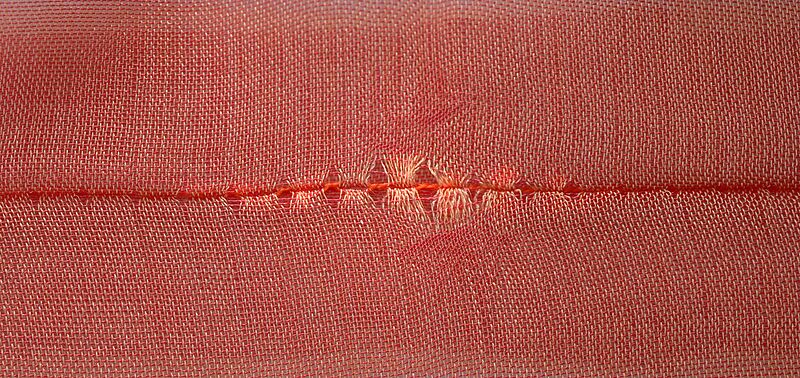
The seam slippage behaviour depends on the fabric and can therefore only be minimally influenced by changing the sewing conditions. Additional topstitching of stressed seam positions, selecting a different seam type (e.g. using felled seams or safety seams), using the highest possible stitch density, using the widest possible seam allowance, taping of the fabric in the seam area with a heat-bonded tape; additional trimming of the particular layers of fabric. The sewing thread used has no influence on the seam slippage behaviour. As a rule, the fabric manufacturer is required to optimise the seam slippage behaviour.
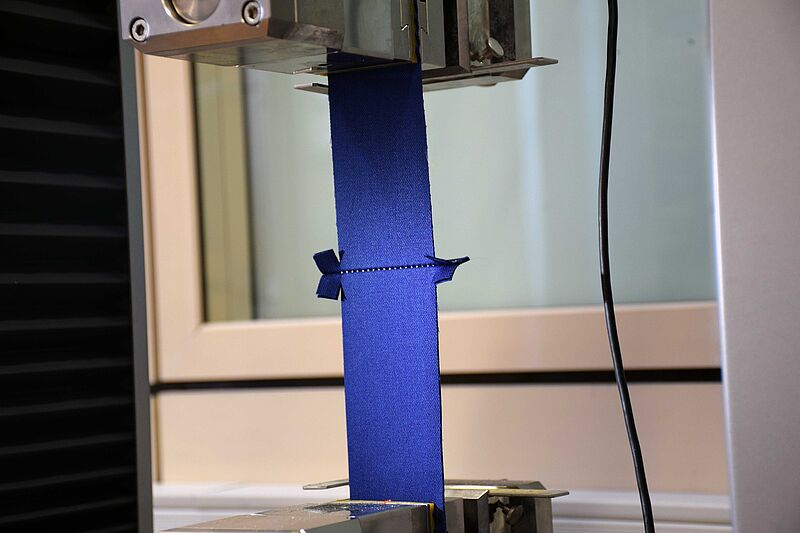
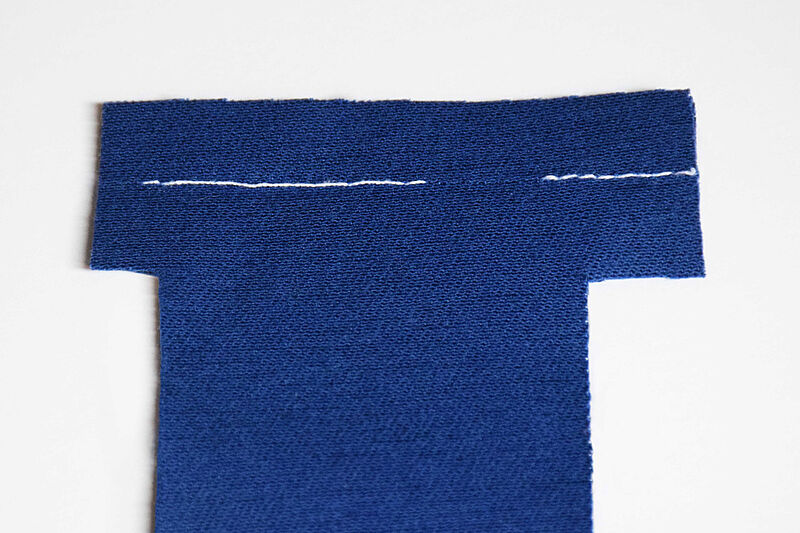
Seam breaking strength refers to the resistance of seam to tensile stress applied in crosswise direction to the seam. If the seam breaking strength is insufficient, the seams will tear during subsequent use. A well-known practical example of this is burst seat seams.
The seam breaking strength is determined by the fabric, the sewing thread and the sewing parameters. The basic level of seam strength is initially determined by the tear strength of the fabric. In addition, the choice of sewing thread is the primary factor in determining the achievable seam strength. The raw material, construction and thickness determine the strength level (maximum tensile force) of the sewing thread and thus the strength of the seam. For example, a coarse polyester continuous filament thread has a significantly higher tensile strength than a fine cotton spun. The maximum tensile force specified on the product data sheets helps with an initial assessment.
When selecting sewing parameters, stitch density, stitch type and thread balance in the seam have a major influence on the seam breaking strength. Increasing the stitch density from 4 to 5 stitches/cm, for example, improves the seam breaking strength by approx. 25% when using a double chain stitch with Saba 120. When comparing the most important stitch types for joint seams, the double lockstitch and the double chain stitch, the double chain stitch has clear advantages due to its higher seam elasticity. The optimum thread balance for the double lockstitch is achieved when the needle thread and bobbin thread are of equal length.
FAQ
-
Seam stability describes a seam’s ability to resist slippage and tensile stress without opening or tearing.
-
Seam slippage is the displacement of warp and weft yarns in the seam area under transverse tensile load.
-
Seam slippage depends primarily on the fabric construction, not on the sewing thread.
-
They can only influence it to a limited extent. The fabric structure is decisive.
-
Seam breaking strength is the resistance of a seam to tensile force applied across the seam.
-
Fabric strength, sewing thread properties and sewing parameters.
-
Thread raw material, construction and thickness determine the maximum tensile force and therefore the seam strength.
-
Yes. Increasing stitch density can significantly improve seam breaking strength.
-
Double chain stitch often provides higher seam elasticity and strength compared to double lockstitch.
-
Correct thread balance ensures even load distribution and optimum seam performance.