
Intro
Embroidery makes all the difference – it enhances products and adds a personal touch. However, high-quality embroidery is not created by thread alone. The stitch structure plays a decisive role in determining appearance, durability and productivity.
Modern embroidery machines generally work with the double lockstitch (stitch type 301). This stitch type ensures reliable stitch formation and balanced thread interlocking between needle thread and bobbin thread. Based on this principle, embroidery designs are constructed using three fundamental stitch types: running stitches, satin stitches and fill stitches.
Understanding these stitch types is essential for selecting the right embroidery thread, achieving distortion-free embroidery and ensuring efficient production.
Running stitches
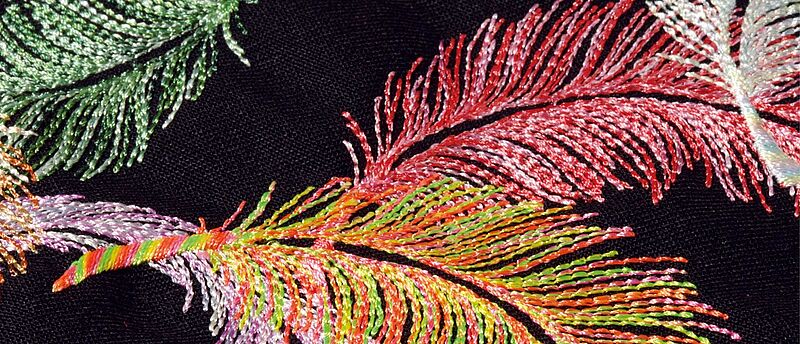
Running stitches run in a line one after the other – similar to a conventional sewn seam. They form the most basic stitch structure in embroidery.
The stitch length can be adjusted depending on the design requirements. Shorter stitches provide higher precision, while longer stitches improve efficiency. The thickness of running stitches can be emphasised by stitching over them several times.
Running stitches are typically used for:
- Fine outlines and contours
- Small lettering
- Delicate details
- Technical markings
Because they require relatively few stitches, running stitches contribute to economical embroidery production while maintaining clarity and precision.
Satin stitches
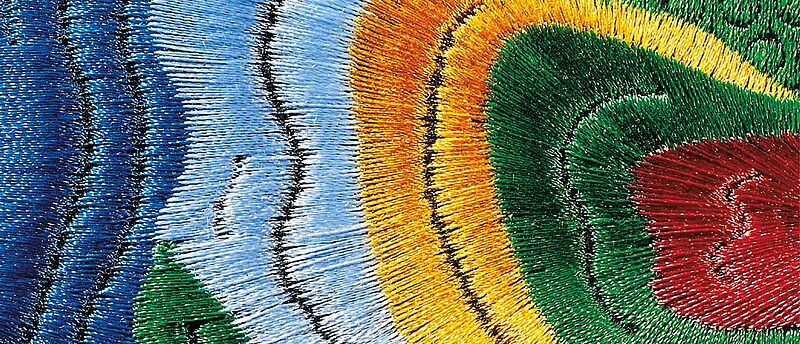
Satin stitches are closely spaced zigzag stitches. Their width and density can be freely selected, allowing the digitizer to adapt them precisely to the embroidery design.
They are considered the most versatile of all embroidery stitches due to their smooth, uniform surface and elegant appearance. Satin stitches are particularly suitable for:
- Lettering and monograms
- Logos and emblems
- Decorative borders
- Clearly defined shapes
By using solid underlay stitches, satin stitches can be made very three-dimensional. The underlay provides additional dimensional stability and prevents the embroidery from sinking into the fabric. This is especially important when working with soft or textured materials.
The visual effect of satin stitches is strongly influenced by thread quality. High-quality embroidery threads with consistent sliding values ensure smooth stitch formation and uniform coverage.
Fill stitches
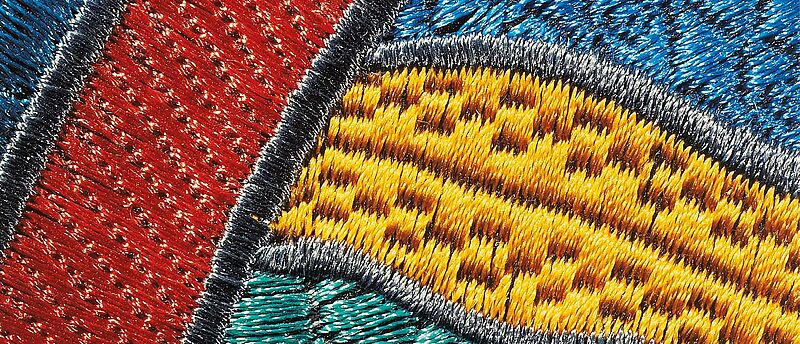
Fill stitches are used to fill larger embroidery areas. They create structured surfaces and allow the digitizer to influence the optical effect of the design.
Depending on stitch rhythm and frequency, the embroidered area can shine more or less brightly and can develop relief-like structures. The direction of the stitches significantly affects light reflection and colour perception.
A favourable stitch length helps reduce the total stitch count, which increases productivity without compromising the embroidery result.
Fill stitches are commonly used for:
- Large logo surfaces
- Decorative background elements
- Technical embroidery applications
Their flexibility makes them essential for combining aesthetic appearance with efficient stitch programming.
The role of stitch types in embroidery quality
Although embroidery machines execute the design, the stitch types define the final appearance. The digitizer constructs the embroidery pattern using running stitches, satin stitches and fill stitches, and sets parameters such as stitch length, stitch density and embroidery direction.
The correct combination of stitch type and embroidery thread is crucial. In addition to appearance, reliability and productivity are key factors in professional embroidery. Consistent stitch formation, balanced thread tension and suitable underlay stitches all contribute to distortion-free embroidery with sharp contours.
Conclusion
Running stitches, satin stitches and fill stitches form the technical foundation of machine embroidery. Each stitch type has its own function and area of application, influencing surface structure, light reflection and dimensional stability.
For textile customers, understanding these stitch types provides a clearer picture of how embroidery designs are created and how thread quality interacts with stitch construction. When stitch type, digitizing parameters and embroidery thread are properly coordinated, the result is precise, durable and visually impressive embroidery.
FAQ
-
The three fundamental stitch types in machine embroidery are running stitches, satin stitches and fill stitches. All embroidery designs are constructed using combinations of these stitch structures.
-
Modern embroidery machines generally operate using the double lockstitch (stitch type 301), which ensures reliable stitch formation and balanced interlocking between needle and bobbin thread.
-
Stitch types determine the appearance, dimensional stability, durability and productivity of an embroidery design. They influence surface structure, light reflection and stitch count.
-
Running stitches are used for fine outlines, small lettering, delicate details and technical markings. They are economical because they require relatively few stitches.
-
A satin stitch consists of closely spaced zigzag stitches. It creates a smooth, uniform and slightly raised surface, often used for lettering, logos and decorative borders.
-
Their adjustable width and density allow precise adaptation to design requirements. With proper underlay, satin stitches can achieve a three-dimensional effect.
-
Underlay stitches provide dimensional stability, prevent the embroidery from sinking into soft fabrics and improve overall stitch definition.
-
Fill stitches are used to cover larger areas. They create structured surfaces and allow control over texture, shine and light reflection.
-
Stitch direction influences light reflection and colour perception. Changing the stitch angle can create relief effects and visual depth.
-
Optimised stitch length can reduce total stitch count, improving production efficiency without compromising embroidery quality.
-
The correct combination of stitch type, density and underlay helps prevent fabric distortion and ensures sharp contours.
-
High-quality embroidery threads ensure smooth stitch formation, consistent tension behaviour and uniform coverage, particularly in satin and fill stitches.
-
The combination of stitch type, digitizing parameters, thread selection and machine settings defines the final visual and technical result.